Resources
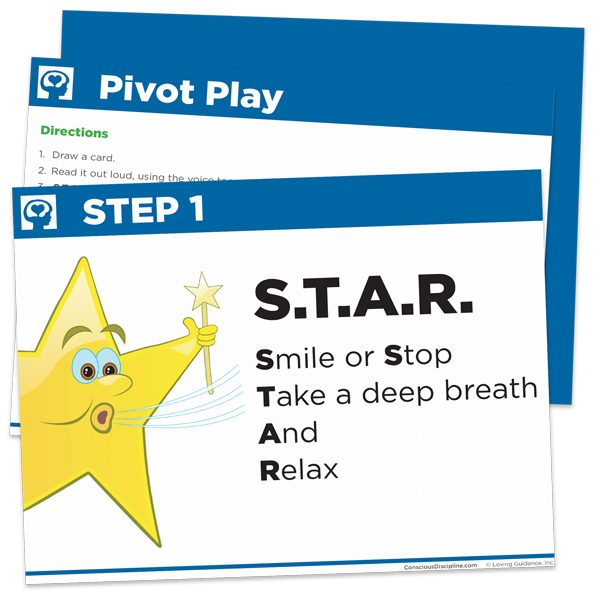
Conscious Discipline asks us to transform our responses to challenging behaviors. This is a challenging and ongoing process, but Pivot Play provides a helpful practice opportunity. Start by reading...
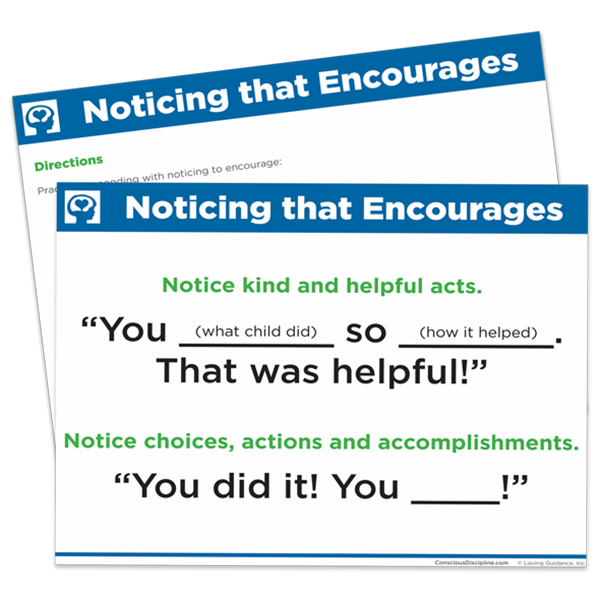
The skill of noticing is foundational to the successful implementation of Conscious Discipline. Practice this vital skill using the scenarios and cue card provided here. Age Adults Helps With...
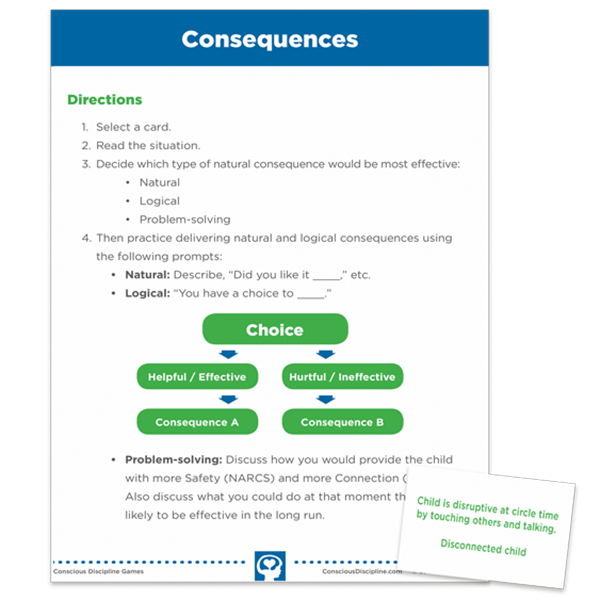
Shifting from punitive discipline to natural and logical consequences can be difficult, but repeated practice helps! This activity provides a variety of scenarios, asking you to identify the most...
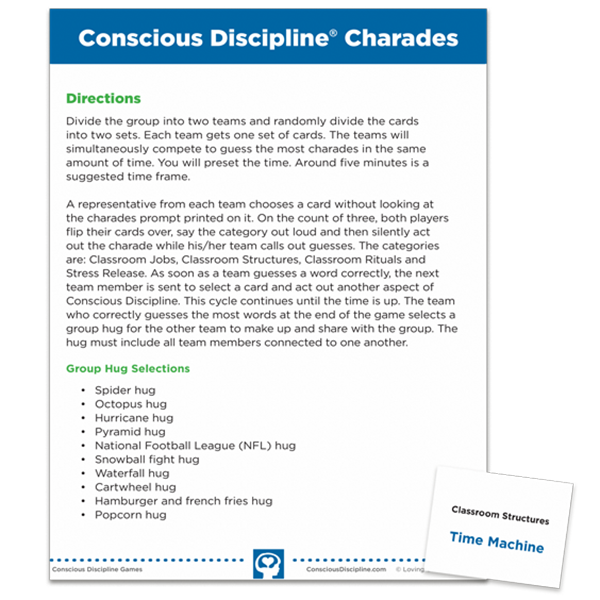
This group activity transforms the classic game of Charades into a spirited Conscious Discipline review that will unite your staff. Categories include Classroom Jobs, Classroom Structures, Classroom Rituals and...
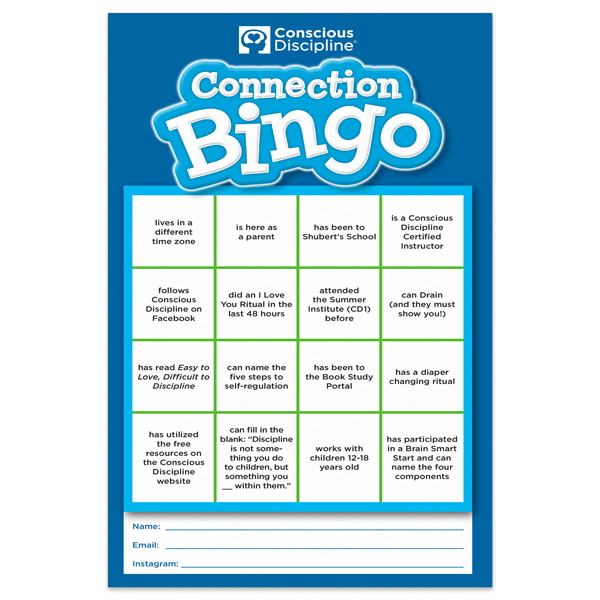
Connection Bingo helps large groups mingle, get to know one another and form connections. The printable bingo card lists sixteen characteristics, including “lives in a different time zone” and...
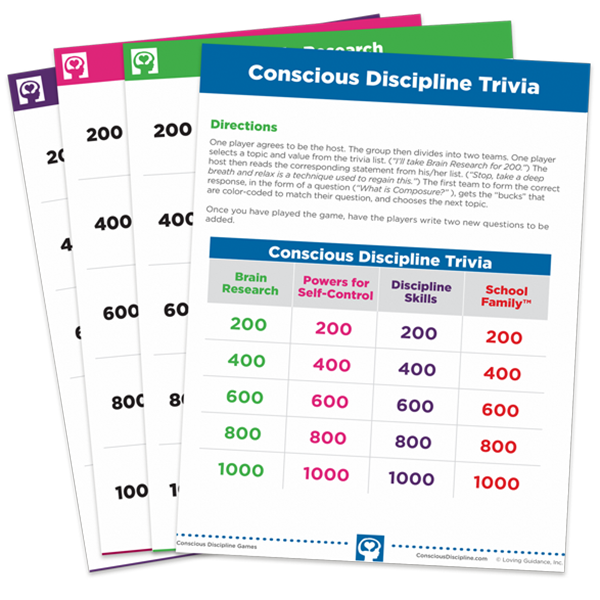
Review the skills, powers and structures of Conscious Discipline with this fun trivia game. Categories include Brain Research, Powers for Self-Control, Discipline Skills, and School Family™. Correct answers are...
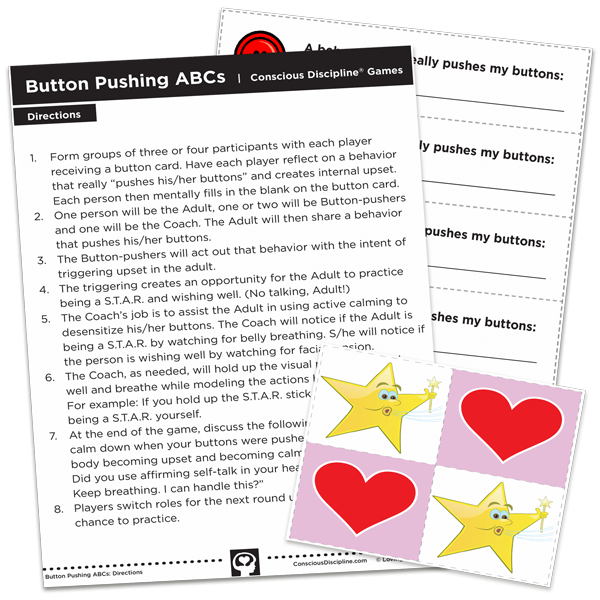
Whether it’s whining, interrupting, or ignoring directions, we all have behaviors that really “push our buttons,” triggering internal upset. In these situations, we often react negatively rather than responding...
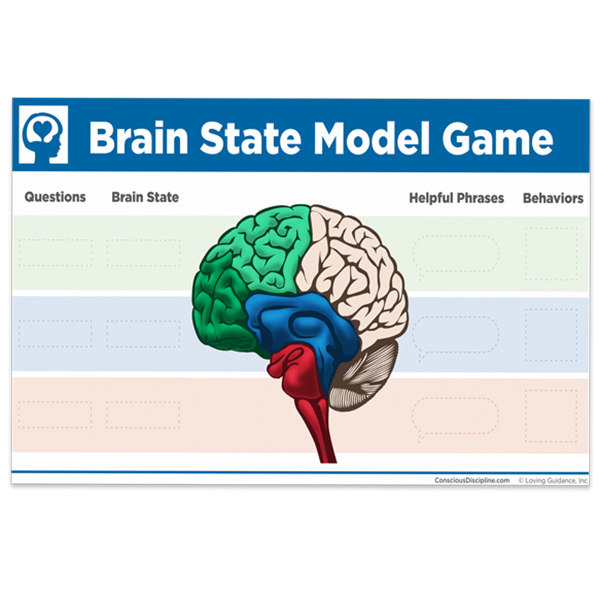
Perfect for staff trainings and professional development, the Brain State Model Game asks educators to complete a brain state model with appropriate questions (e.g., “Am I safe?”), brain states,...
Our website uses necessary tracking cookies to provide the highest form of customer care and user experience. Please “Accept” cookies for optimal performance by clicking the checkbox. For full details, read our Cookie Policy.